The great houses
Spode, Minton, Derby, Worcester, Coalport, Wedgwood: the names that made bone china, and what became of them.

For two centuries a handful of Staffordshire and Midlands houses defined bone china. Their objects now fill museums; their names live on in very different ways.
Spode
The house that established the recipe, at Stoke-upon-Trent. Traded for much of its history as Copeland. The company entered administration in 2008; the Spode name passed to Portmeirion in 2009. The Spode Museum Trust cares for the collection and archive.
Minton
Founded by Thomas Minton at Stoke in 1793 and one of the most inventive decorators of the Victorian age, celebrated for its gilding and for designers such as Christopher Dresser. The Met’s Minton soup plate shown in Decoration is typical of its ambition.
Derby
Porcelain was made in Derby from about 1750. The works moved to Osmaston Road in the late 1870s, and Royal Crown Derby still makes bone china there today. See the directory.


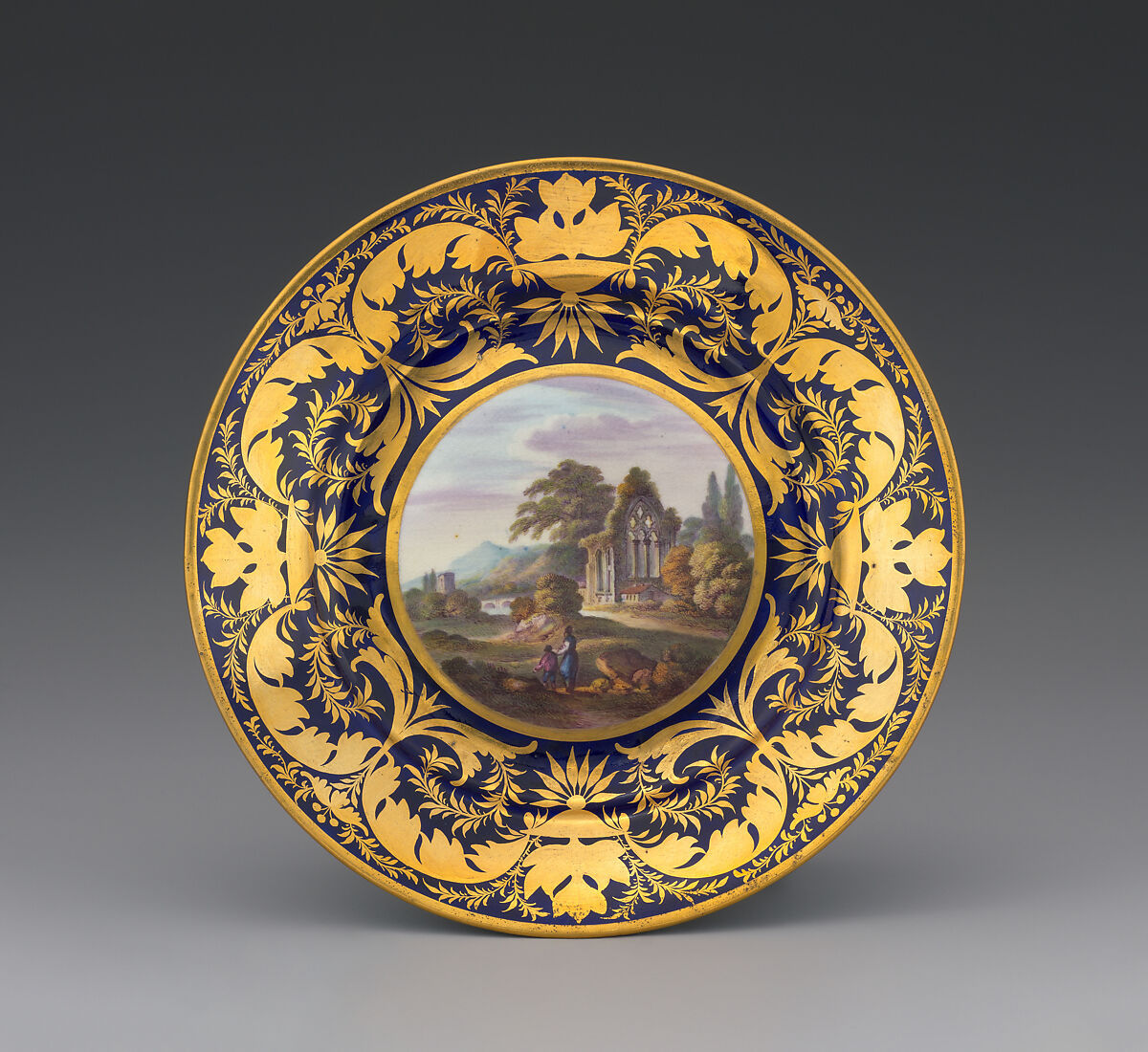
Worcester
The Worcester factory, founded in 1751, made some of the most original bone china of the 1870s, much of it in the Japanese taste. The Met catalogues the factory as operating until 2008; the Royal Worcester name passed to Portmeirion in 2009.

Coalport
Founded in Shropshire in the 1790s, Coalport was famous for flower-encrusted and richly gilded wares. The business later moved to Stoke-on-Trent, where it continued to make bone china in the twentieth century.
Wedgwood
Josiah Wedgwood’s firm made bone china from 1812 for a period and later permanently. Owned by Fiskars since 2015, Wedgwood paused its Barlaston factory in late 2025 and announced in 2026 that production there would focus on high-end handcrafted pieces including its prestige bone china and Jasperware. See the directory.